
Table of Contents
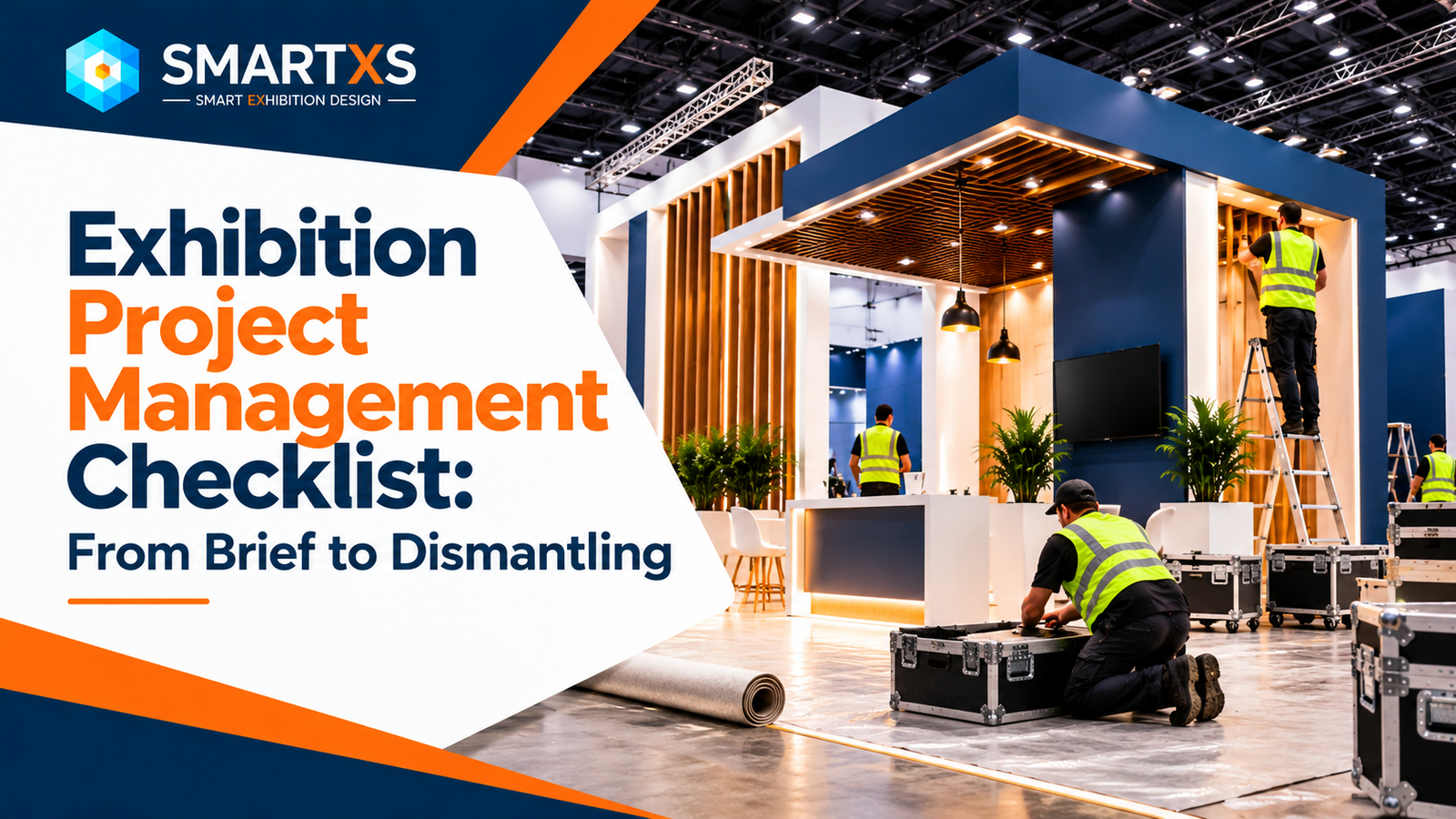
Exhibition Project Management Checklist: From Brief to Dismantling
Exhibition project management checklist require more than an attractive design or a convenient service description. UK exhibitors need a practical plan that connects the right people, equipment and decisions to a successful event. This guide explains the steps in a way that marketing managers and event teams can apply to real exhibition programmes.
Defining the project before design begins
An exhibition project begins with a clear purpose, not a drawing. Record the event name, dates, venue, audience, stand allocation and objectives. Identify the decision maker, internal stakeholders and the person authorised to approve changes.
Write down the visitor activities that must be supported. Demonstrations, hospitality, meetings and presentations create different operational requirements. The brief should explain what the exhibition team needs from the space, not just how it should look.
Practical questions to ask
Before moving to the next stage, ask who owns the decision, what information is missing and what could prevent the planned activity from working. These questions turn a broad recommendation into an action that a marketing manager or event organiser can use. They also reveal whether the stand design, the technical team and the exhibition schedule are aligned.
Establishing one accountable project owner
A project becomes difficult when several people assume someone else is handling a critical task. Nominate one person to maintain the master schedule, decision log and responsibility list. That person should know who owns each deliverable and when it must be approved.
A project manager does not need to perform every activity personally. Their role is to connect designers, suppliers, organisers and the exhibitor, resolve dependencies and escalate decisions. A clear contact structure prevents fragmented instructions reaching contractors.
How to document the decision
Keep a short record of the agreed approach, the relevant drawing or inventory reference and the person who confirmed it. If the decision affects another supplier, share the updated instruction directly rather than assuming it will be passed on. Clear records matter when teams are working at different locations or preparing for more than one event.
Building a milestone schedule
Work backwards from the first visitor arrival, allowing time for installation, inspection and staff preparation. Include dates for design approval, artwork delivery, technical submissions, production sign off, dispatch and site access. Each milestone should have a named owner.
Do not treat every deadline as independent. A late graphic approval may affect fabrication and transport. The schedule should show which tasks rely on earlier decisions, making it easier to identify where a change has consequences.
Explore completed exhibition environments in the Smart XS project portfolio.
Smart XS provides exhibition project management services as part of its exhibition services for UK and international events.
For related guidance on exhibition stand storage and reuse, see our dedicated article covering that stage of the exhibition process.
For related guidance on international exhibition shipping, see our dedicated article covering that stage of the exhibition process.
For related guidance on hybrid exhibition stands, see our dedicated article covering that stage of the exhibition process.
What successful execution looks like
The test is whether the exhibition team can use the result without additional explanation or last minute improvisation. Visitors should be able to navigate the environment, staff should know how equipment operates and contractors should have the information needed for safe delivery. Review the outcome against the original brief rather than appearance alone.
Gathering organiser and venue requirements
Request the exhibitor manual and technical guidance as soon as they are available. Check permitted stand heights, walling rules, access arrangements, electrical services, build periods and required documentation. Confirm which rules apply to your specific stand type.
Organiser guidance can change between editions of the same event. Keep a dated record of the applicable documents and questions raised. Where structural approval or specialist review is needed, assign responsibility early.
Practical questions to ask
Before moving to the next stage, ask who owns the decision, what information is missing and what could prevent the planned activity from working. These questions turn a broad recommendation into an action that a marketing manager or event organiser can use. They also reveal whether the stand design, the technical team and the exhibition schedule are aligned.
For related services, explore Smart XS exhibition services and review how the company supports stand delivery across different event requirements.
Creating a decision and approval register
Major project decisions should be recorded rather than left in scattered email threads. Maintain a simple register showing the decision, options considered, person responsible and date approved. Link the record to the relevant drawing or specification.
This is especially important when multiple departments are involved. Marketing may approve graphics while a technical team approves product demonstration requirements. An approval register helps the project manager distinguish confirmed instructions from suggestions.
How to document the decision
Keep a short record of the agreed approach, the relevant drawing or inventory reference and the person who confirmed it. If the decision affects another supplier, share the updated instruction directly rather than assuming it will be passed on. Clear records matter when teams are working at different locations or preparing for more than one event.
Coordinating stand design with operations
Design should be reviewed for visitor experience and practical delivery. Check entrances, demonstration zones, meeting areas, storage, accessibility and staff circulation. Ask whether furniture and equipment can be installed within the available access period.
The design team should also confirm material finishes, graphic locations, power requirements and any features requiring specialist assessment. A beautiful visualisation is not enough if technical and operational details remain unresolved.
What successful execution looks like
The test is whether the exhibition team can use the result without additional explanation or last minute improvisation. Visitors should be able to navigate the environment, staff should know how equipment operates and contractors should have the information needed for safe delivery. Review the outcome against the original brief rather than appearance alone.
Preparing graphics and brand assets
Collect logos, brand guidelines, approved copy, imagery and any campaign assets before artwork production begins. Agree which files are final and who is authorised to approve proofs. Graphics should be checked for dimensions, legibility and correct placement.
A common problem is treating a low resolution presentation image as production artwork. The artwork supplier should provide the necessary technical specification. Record the approved version so older files do not accidentally reappear during production.
Practical questions to ask
Before moving to the next stage, ask who owns the decision, what information is missing and what could prevent the planned activity from working. These questions turn a broad recommendation into an action that a marketing manager or event organiser can use. They also reveal whether the stand design, the technical team and the exhibition schedule are aligned.
Planning audio visual and electrical services
List every screen, light, computer, demonstration unit and other electrical item. Note where it will be positioned, who supplies it and what connections it needs. Confirm power and network arrangements with the venue or appointed contractor.
Technical rehearsals should be planned for equipment that supports live demonstrations. A backup presentation file and clear escalation contact can help the exhibition team respond to a failed display without improvising during visitor hours.
How to document the decision
Keep a short record of the agreed approach, the relevant drawing or inventory reference and the person who confirmed it. If the decision affects another supplier, share the updated instruction directly rather than assuming it will be passed on. Clear records matter when teams are working at different locations or preparing for more than one event.
Organising products and demonstration equipment
Products intended for display may need specialist packing, secure mounts, lifting arrangements or controlled access. Document dimensions, handling requirements and who is responsible for preparation. Check whether items need to arrive before particular stand elements are closed in.
Demonstration equipment should be tested before dispatch where practical. Keep accessories, adapters and essential instructions together. The person running the demonstration should know how to reset the equipment and whom to contact for technical help.
What successful execution looks like
The test is whether the exhibition team can use the result without additional explanation or last minute improvisation. Visitors should be able to navigate the environment, staff should know how equipment operates and contractors should have the information needed for safe delivery. Review the outcome against the original brief rather than appearance alone.
Managing contractors and suppliers
A supplier schedule should identify what each party is delivering and when. Include graphic production, AV, furniture, transport, stand construction and venue services as relevant. Share only the drawings and specifications that have been approved for use.
Contractor coordination is especially important during the build period. Teams may need access to the same area at different stages. The project manager should resolve sequencing so one activity does not obstruct another.
Practical questions to ask
Before moving to the next stage, ask who owns the decision, what information is missing and what could prevent the planned activity from working. These questions turn a broad recommendation into an action that a marketing manager or event organiser can use. They also reveal whether the stand design, the technical team and the exhibition schedule are aligned.
The Smart XS project portfolio provides examples of completed exhibition environments. These are project examples rather than promises that every new brief has the same technical scope.
Preparing the transport and site access plan
Record collection locations, packing details, delivery contacts, loading arrangements and the permitted site access window. The plan should distinguish between items delivered directly to the venue and those travelling with the installation team.
A packing list should identify cases and their contents clearly. For overseas exhibitions, the logistics plan needs additional attention to documentation and customs procedures. The transport plan is complete only when the receiving arrangements are confirmed.
How to document the decision
Keep a short record of the agreed approach, the relevant drawing or inventory reference and the person who confirmed it. If the decision affects another supplier, share the updated instruction directly rather than assuming it will be passed on. Clear records matter when teams are working at different locations or preparing for more than one event.
Running the pre event readiness review
Before dispatch, bring the relevant team members together to review the approved design, outstanding tasks and known risks. Confirm that artwork, equipment, technical services and venue permissions are ready. Review the contact list and escalation procedure.
The purpose of the review is to discover unresolved issues while there is still time to act. Use a short written action log. Every open item should have an owner and a realistic completion point.
What successful execution looks like
The test is whether the exhibition team can use the result without additional explanation or last minute improvisation. Visitors should be able to navigate the environment, staff should know how equipment operates and contractors should have the information needed for safe delivery. Review the outcome against the original brief rather than appearance alone.
Controlling installation on site
Installation should follow a documented sequence with an identified site lead. Check access permissions, unloading arrangements, working areas and specialist contractor timings. Safety requirements must be followed throughout construction.
The site lead should compare progress against approved drawings and record any necessary changes. If a problem affects structure or compliance, seek the appropriate technical decision rather than making an informal adjustment.
Practical questions to ask
Before moving to the next stage, ask who owns the decision, what information is missing and what could prevent the planned activity from working. These questions turn a broad recommendation into an action that a marketing manager or event organiser can use. They also reveal whether the stand design, the technical team and the exhibition schedule are aligned.
Completing the stand handover
A proper handover confirms that the stand is ready for staff and visitors. Inspect graphics, finishes, lighting, screens, furniture, demonstration equipment and general cleanliness. Note any outstanding issue and who will resolve it.
The exhibition team should be shown how relevant systems operate and who to contact if assistance is needed. This avoids leaving staff to discover basic operational details during the opening period.
How to document the decision
Keep a short record of the agreed approach, the relevant drawing or inventory reference and the person who confirmed it. If the decision affects another supplier, share the updated instruction directly rather than assuming it will be passed on. Clear records matter when teams are working at different locations or preparing for more than one event.
Supporting the stand during opening hours
A project plan should include support arrangements after the stand opens. Identify the main contact for technical faults, replacement materials and venue questions. Record any restrictions on access or work during visitor hours.
The exhibition team can help by reporting problems precisely. A short description, location and photograph may be more useful than a general message that something is not working. Agree a sensible escalation route before the event.
What successful execution looks like
The test is whether the exhibition team can use the result without additional explanation or last minute improvisation. Visitors should be able to navigate the environment, staff should know how equipment operates and contractors should have the information needed for safe delivery. Review the outcome against the original brief rather than appearance alone.
Planning dismantling before the event opens
Dismantling is not an afterthought. Confirm when breakdown may begin, which contractors are attending, how items will be packed and where they will go next. The dismantling plan should distinguish reusable equipment from materials requiring other handling.
Protective packaging and clear labels help preserve components for future exhibitions. If goods are travelling onward to another event, the project manager must confirm that the next receiving team has the required information.
Practical questions to ask
Before moving to the next stage, ask who owns the decision, what information is missing and what could prevent the planned activity from working. These questions turn a broad recommendation into an action that a marketing manager or event organiser can use. They also reveal whether the stand design, the technical team and the exhibition schedule are aligned.
Reviewing the event and preserving knowledge
After the event, gather feedback from the stand team and delivery partners. Record what worked well, which operational problems occurred and what should change. Store final drawings, approved graphics and inventory records where the next project team can find them.
A concise lessons learned document is often more valuable than an informal discussion. It creates a practical starting point for future events and helps the organisation avoid repeating the same mistakes.
How to document the decision
Keep a short record of the agreed approach, the relevant drawing or inventory reference and the person who confirmed it. If the decision affects another supplier, share the updated instruction directly rather than assuming it will be passed on. Clear records matter when teams are working at different locations or preparing for more than one event.
How Smart XS fits into the checklist
Smart XS states that it provides full project management for exhibitions and events in the UK and internationally, alongside design, build, shipping and equipment storage. Its portfolio includes complex multi area projects requiring coordination between teams.
For an upcoming event, share the venue, event dates, stand requirements, technical equipment and intended visitor activities. The Smart XS team can then discuss how its service scope relates to the specific tasks and responsibilities in your project.
What successful execution looks like
The test is whether the exhibition team can use the result without additional explanation or last minute improvisation. Visitors should be able to navigate the environment, staff should know how equipment operates and contractors should have the information needed for safe delivery. Review the outcome against the original brief rather than appearance alone.
Related Smart XS guides
This topic connects with Smart XS exhibition services, including design, project management, international shipping and equipment storage. The following planned guides address adjacent questions without repeating this article.
For the related operational topic, read Hybrid Exhibition Stands: Modular Flexibility with Bespoke Design once that article has been published.
For the related operational topic, read International Exhibition Shipping: A Practical Guide for UK Exhibitors once that article has been published.
For the related operational topic, read Exhibition Stand Storage and Reuse: Preparing for Future Events once that article has been published.
Frequently asked questions
Who should own an exhibition project checklist?
A named project manager or responsible lead should maintain the checklist, assign tasks and record approvals.
When should exhibition planning start?
Begin when the event and stand allocation are known. Work backwards from installation and organiser submission dates.
What should be checked before handover?
Inspect the stand, graphics, lighting, demonstrations, furniture and operational instructions, and record unresolved issues.
Does Smart XS manage international exhibition projects?
Smart XS advertises full project management for exhibitions and events around the world.
Discuss your next exhibition with Smart XS
For a discussion focused on exhibition project management checklist, share the event details, stand requirements and any relevant equipment information with Smart XS. Its team can consider the brief alongside the company’s published exhibition design, project management, shipping and storage services. Visit Smart XS contact to begin the conversation.